Minecraft mod, server and client
Six crates, up to 512 a slot
Each tier adds a row of nine. One module on the tab lifts every slot from 64 to 512, and the screen splits into pages once the grid no longer fits.
The crates
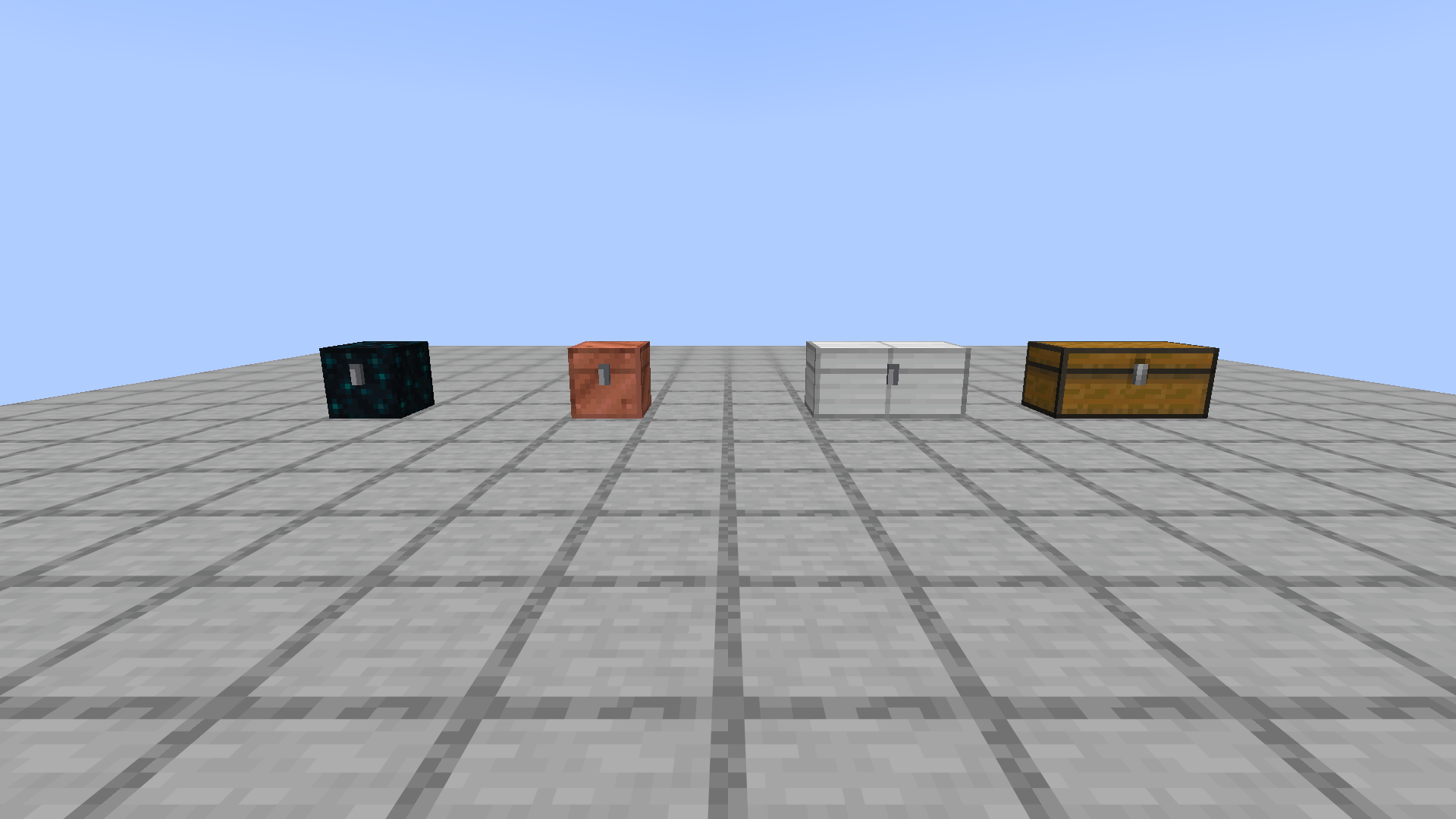
Copper to echo, six tiers
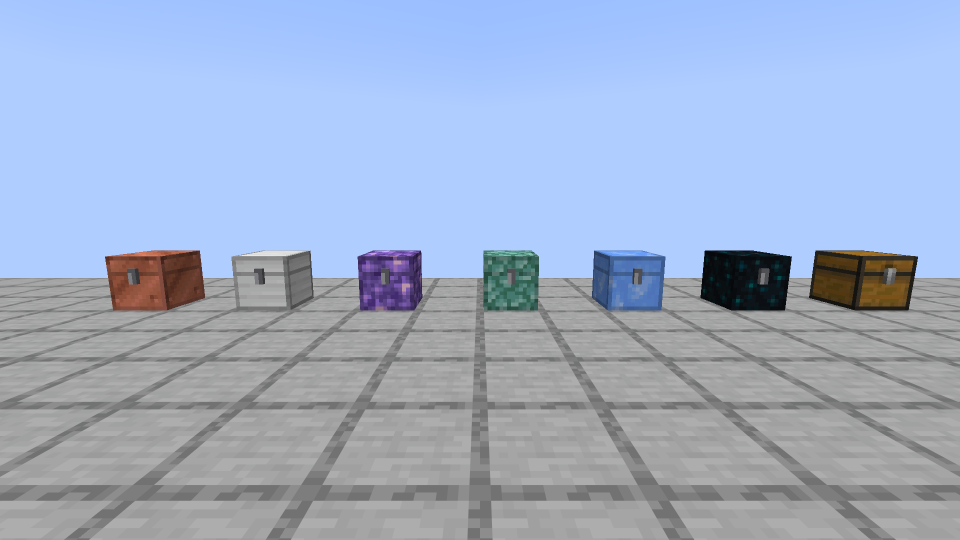
They are ordered by how dangerous the material is to fetch, not by the usual iron, gold, diamond ladder. Each tier is the crate before it surrounded by eight of the new material.
- Copper27
- Iron36
- Amethyst45
- Prismarine54
- Breeze63
- Echo72
Capacity
A slot that holds 512
What changes the capacity sits on the tab hanging off the left edge of the screen. The mod ships three modules, 128, 256 and 512, and a crate takes the strongest offer rather than the sum: two 256 modules still give 256.
Pull the module out, close the screen, and everything above the new capacity drops on the ground. Emptying a crate before taking its module back is the only safe order.
What the module changes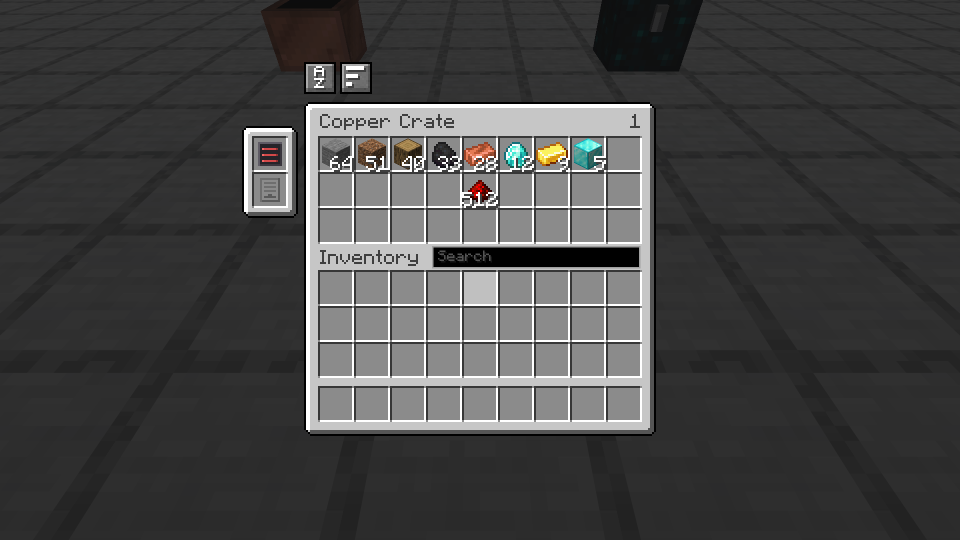
Rows
Sixteen modules, twenty-four rows
A row module is a chest surrounded by planks, and each one adds nine slots to the crate holding it. The cell under the capacity one takes sixteen at once, so a copper crate can end up bigger than an echo one.
Adding or taking one back reopens the screen, because a menu's slot list is fixed once it has been built. That happens at the start of the next tick, never inside the click.
How rows add up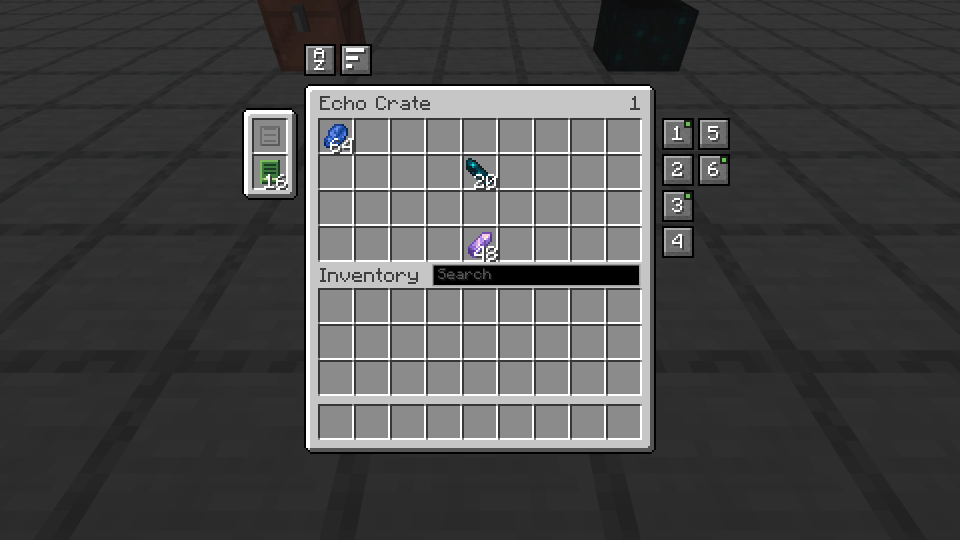
Sorting
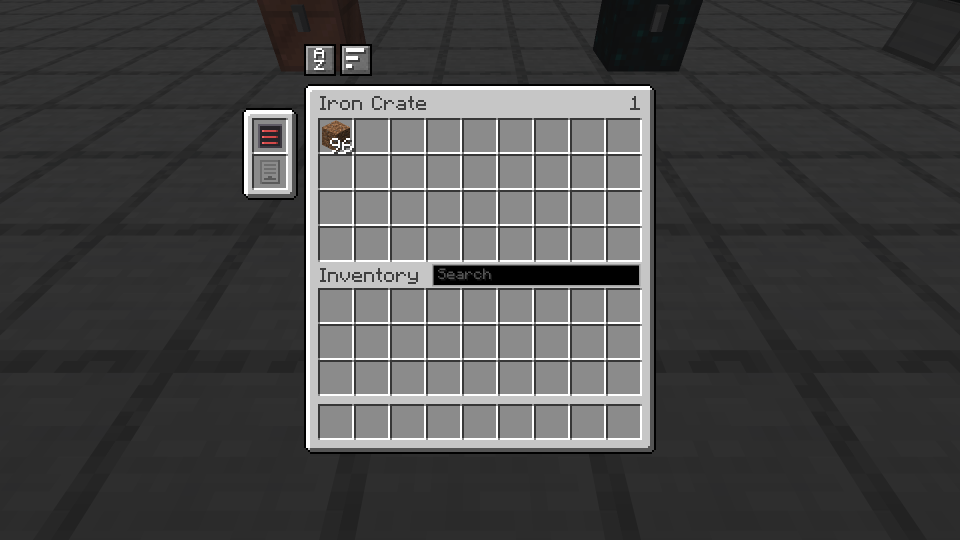
Two buttons above the corner
One orders by name, the other by how full each pile is. Both gather identical stacks into one, which is where the free slots come from. Pressing again reverses it, and the drawing shows what the next press will do, not what the last one did.
The order is worked out on the player's own machine. A server holds no language files, so it cannot know that this player reads Pierre where another reads Stone.
Sorting, search and pages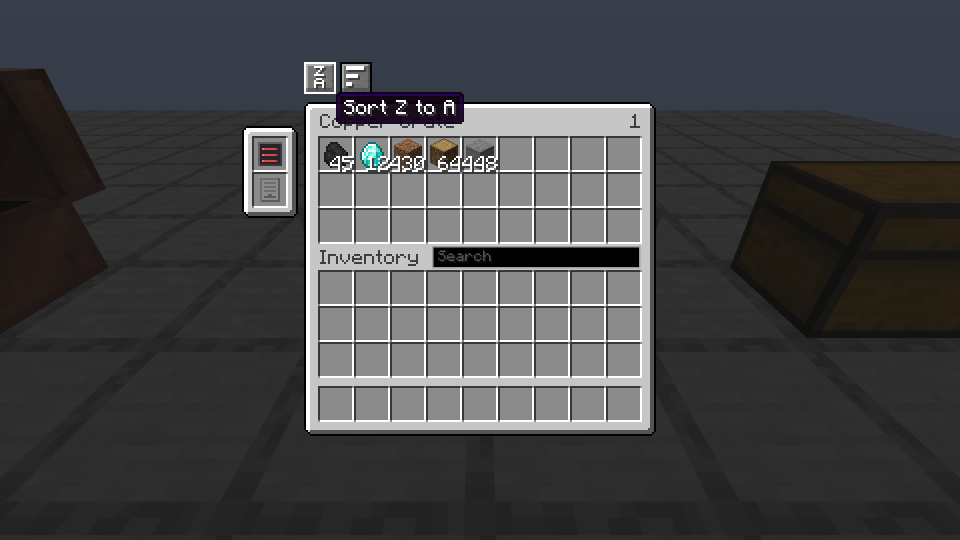
Pages
When the grid no longer fits
A page holds four rows at most. Past that the screen splits, and the pages share the rows evenly: six rows give two pages of three, not one full page and one nearly empty.
The numbers stack down the right edge, with no scrollbar, and a dot marks the pages that carry something. The page number never reaches the server, so no slot index can be steered from outside.
How the screen splits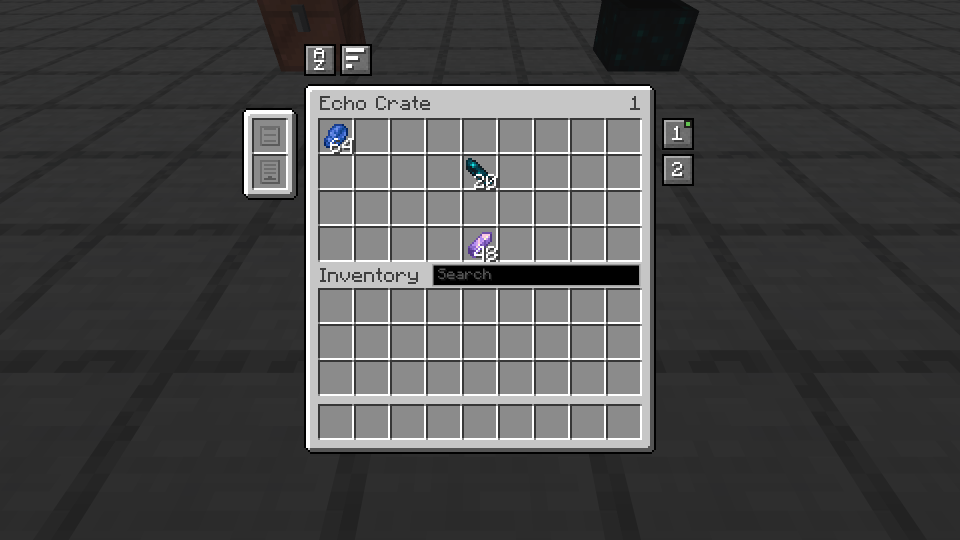
Automation
A hopper fills all the way up
Hoppers and pipes write into a slot up to the crate's capacity instead of stopping at 64. It is the one part of the mod that depends on what else is installed.
With lithium, it is off. Lithium replaces the hopper wholesale and keeps its own copy of the target inventory: against a container answering more than 64 it takes the items out and never writes them in. Measured, not assumed. So while lithium is present a crate tells automation 64 a slot, which costs the feature and keeps the items.
Hoppers, pipes and lithium